Negotiation Strategist
Apply the complete game-theoretic bargaining framework to any negotiation. Use this skill when a user needs to structure a negotiation, determine who has leverage, calculate the fair split, or decide whether to make a concession or walk away. Triggers include: user is preparing for a salary negotiation, contract renegotiation, partnership deal, M&A term sheet, or labor negotiation and wants to know what number to open with and why; user wants to determine the 'pie' — the true surplus that is actually at stake between the two parties, not the headline dollar figures; user needs to identify and quantify their Best Alternative to a Negotiated Agreement (BATNA) or the other side's BATNA before entering talks; user wants to know how to improve their bargaining position before the negotiation starts (raise your BATNA, lower theirs); user must decide whether to bundle multiple issues together or separate them; user is weighing whether to actually strike, walk out, or threaten to do so, and wants to understand the cost-benefit calculation; user wants to propose a virtual-strike or escrowed-revenue arrangement to eliminate collateral damage while preserving negotiating pressure; user is in an alternating-offer negotiation and wants to calculate the equilibrium split given relative patience levels; user suspects they are negotiating over the wrong number (confusing total value with incremental value above no-deal); user faces brinkmanship — escalating risk of breakdown — and wants to calibrate how far to push. This skill does NOT cover simultaneous-move games (use nash-equilibrium-analyzer), one-shot ultimatum games without iteration, or multi-party coalition bargaining beyond two principal parties.
 View on ClawhHub
Install
What You'll Need
Skill Relationships
Unlocks
No dependent skills
Requires
Source Book
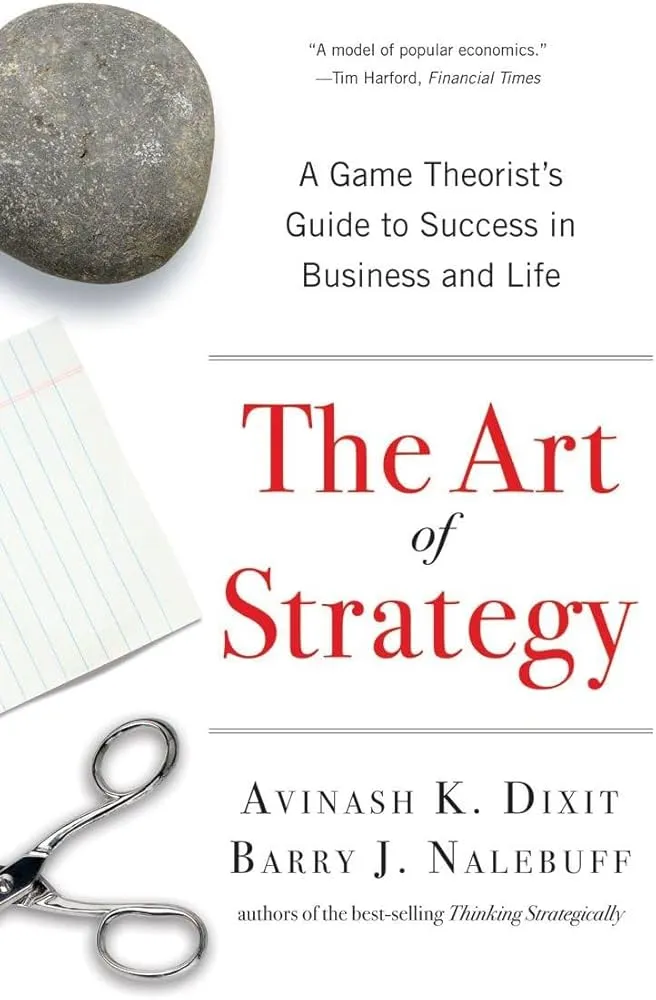
The Art of Strategy
Avinash K. Dixit & Barry J. Nalebuff