Strategic decisions made by intuition, focusing only on own choices without systematically considering opponents' responses, falling for common traps in negotiations, auctions, and competitive situations
Systematic strategic analysis: user has a game tree with identified equilibria, a payoff matrix showing dominant and dominated strategies, a negotiation plan with BATNA calculations and pie measurement, or an assessment of commitment credibility — all as structured deliverables
Who This Is For
Experience: beginner-to-intermediate
“strategists, managers, negotiators, business professionals, decision-makers”
Quality
Problems These Skills Solve
Analyzing multi-player strategic situations to find optimal moves
Preparing for negotiations with BATNA analysis and pie measurement
Evaluating whether commitments, threats, or promises are credible
Deciding between cooperation and competition in repeated interactions
Working Environment
 situation-brief.mdplayers.mdpayoff-analysis.mdstrategy-recommendation.mdnegotiation-prep.mdcommitment-assessment.md
Skills operate on strategic situation descriptions — scenarios with players, objectives, choices, payoffs, and constraints. The agent analyzes these to produce game-theoretic assessments, strategy recommendations, and negotiation plans.
You provide
·description of their strategic situation, players involved, objectives, constraints, known payoffs or outcomes
How Skills Work Together
Install
Minimal
Foundation skills: backward reasoning, Nash equilibrium, prisoners' dilemma
Core
Foundation + hub + negotiation + commitment
Full
All 10 skills
Extracted Skills
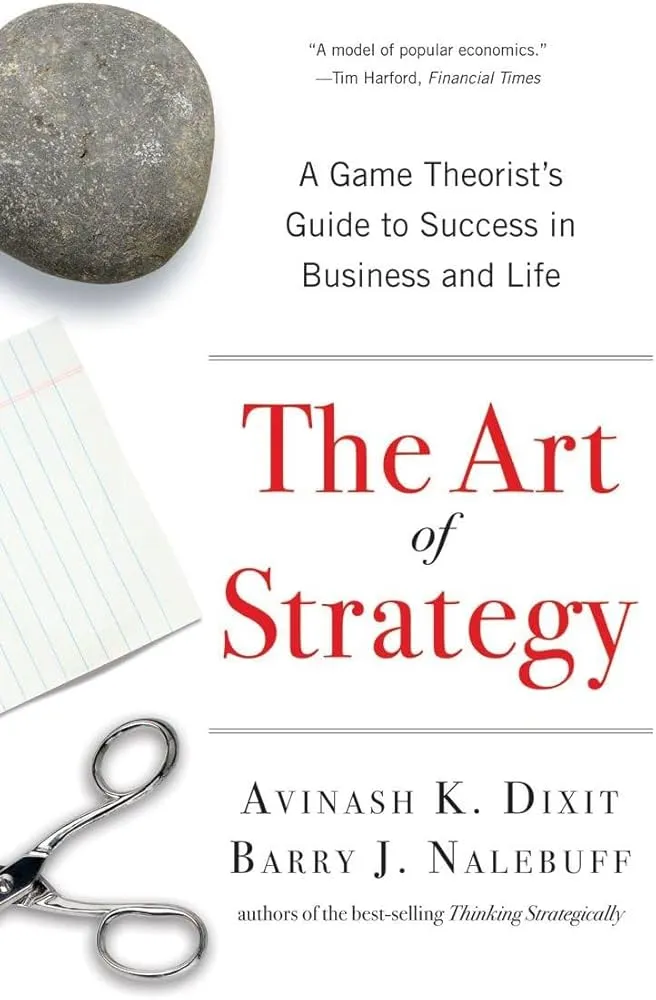
Auction Bidding Strategist
Apply the complete game-theoretic auction framework to determine the optimal bid in any auction format. Use this skill when a user is preparing to bid in an English (ascending) auction, a Japanese auction, a Vickrey (second-price sealed-bid) auction, a Dutch (descending-clock) auction, or a standard sealed-bid first-price auction, and wants the game-theoretically correct strategy rather than guesswork. Triggers include: user is deciding how much to bid in a competitive tender, procurement auction, real estate auction, eBay auction, spectrum license auction, or corporate acquisition; user is worried about overbidding and wants to know how to set a ceiling; user suspects they may be falling into the winner's curse — winning but regretting the price paid; user must classify whether the auction involves private values (each bidder's value is independent) or common values (the item has a single underlying value that all bidders are estimating), because the correct strategy differs sharply between the two; user is evaluating whether to participate in a dollar auction, bidding war, or war-of-attrition-style competitive spending contest and wants to know when to stop or avoid; user needs to shade a bid below their true value in a sealed-bid first-price format and wants the formula; user is designing an auction and wants to know which format will yield more seller revenue; user is bidding in multiple simultaneous auctions and needs to think across the games. This skill does NOT cover multi-round negotiation without a defined auction structure (use a negotiation skill instead), combinatorial auctions with complex package bids, or procurement auctions requiring cost estimation.
Backward Reasoning Game Solver
Solve sequential-move strategic games using backward induction. Use this skill when a user faces a multi-stage decision or negotiation where players alternate moves and each person's best action depends on what others will do later. Triggers include: user needs to determine the optimal opening move in a turn-based game or negotiation; user wants to know whether they can guarantee a win or favorable outcome before the game starts; user must sequence two risky actions and does not know which to attempt first; user is analyzing a multi-stage political, business, or competitive scenario where one party moves, the other responds, and so on; user has a finite-horizon sequential game with known player preferences and needs the game-theoretic solution; user suspects their opponent can anticipate their moves and wants to reason from end-states backward to their first action; user is building a game tree and needs to prune it to find dominant paths; user has a combinatorial takeaway game (like Nim variants) and wants the winning-position formula; user needs to understand why more flexibility or options can paradoxically hurt a player in a sequential game. This skill handles perfect-information, finite, sequential-move games. It does NOT cover simultaneous-move games (use a separate Nash equilibrium skill), incomplete-information games, or infinite-horizon repeated games.
Incentive Scheme Designer
Design and diagnose incentive contracts for situations where effort is unobservable (moral hazard). Use this skill when a user needs to motivate a contractor, employee, co-founder, or agent whose actions cannot be directly monitored; when a user is deciding between a fixed salary, piece-rate, equity share, bonus, or fine structure; when a user needs to set the bonus level so that high-quality effort is in the agent's self-interest; when a user must satisfy both the participation constraint (agent accepts the deal) and the incentive compatibility constraint (agent exerts the desired effort); when a user wants to diagnose why an existing incentive scheme is failing — through sandbagging, gaming, effort diversion, or lack of effort; when a user is deciding between carrots and sticks and needs to understand when each is preferred; when a user suspects financial incentives are crowding out intrinsic motivation (Gneezy/Rustichini effect); when a user manages people performing multiple tasks and needs to know whether to bundle or separate them based on complementarity vs. substitutability; when a user needs to understand efficiency wages and when above-market pay is the cheapest way to deter shirking. This skill covers the full principal-agent problem after a contract is signed. It does NOT cover pre-contract adverse selection (who to hire) — use the information-asymmetry-strategist skill for that.
Information Asymmetry Strategist
Diagnose and resolve information asymmetry in strategic interactions using four mechanisms: signaling, screening, signal jamming, and countersignaling. Use this skill when a user needs to credibly communicate private information to an uninformed counterpart; when a user needs to elicit honest information from a better-informed counterpart without being able to verify their claims; when a user suspects they are on the receiving end of signal jamming or adverse selection and wants to see through it; when a user is designing a pricing scheme, contract structure, hiring process, or product menu and needs to induce self-selection among different customer or candidate types; when a user wants to know whether to signal their quality, countersignal by staying silent, or jam an opponent's signals; when a user needs to apply Bayes' rule to update beliefs after observing an opponent's action in a mixed-strategy game; when a user faces Akerlof-style market collapse risk and wants to identify signaling or screening remedies; when a user is designing a menu of options (e.g., airline fare classes, insurance deductibles, product tiers) and needs to check participation constraints and incentive compatibility constraints. This skill handles both directions of information asymmetry: the informed party communicating outward (signaling, countersignaling, jamming) and the uninformed party extracting information inward (screening, adverse selection management). It does NOT cover moral hazard or principal-agent problems after a contract is signed, nor does it handle simultaneous-move games without information asymmetry (use the Nash equilibrium skill for those).
Nash Equilibrium Analyzer
Find Nash equilibria in simultaneous-move games by constructing payoff matrices, eliminating dominated strategies (Rules 2-3), mapping best responses (Rule 4), and calculating mixed strategy proportions using the indifference principle (Rule 5). Use this skill when two or more players choose actions simultaneously without seeing each other's moves — pricing decisions, product launches, competitive bids, penalty kicks, resource allocation conflicts — and you need to identify stable strategy configurations, calculate exact mixing proportions for zero-sum conflicts, or select among multiple equilibria using focal-point analysis.
Negotiation Strategist
Apply the complete game-theoretic bargaining framework to any negotiation. Use this skill when a user needs to structure a negotiation, determine who has leverage, calculate the fair split, or decide whether to make a concession or walk away. Triggers include: user is preparing for a salary negotiation, contract renegotiation, partnership deal, M&A term sheet, or labor negotiation and wants to know what number to open with and why; user wants to determine the 'pie' — the true surplus that is actually at stake between the two parties, not the headline dollar figures; user needs to identify and quantify their Best Alternative to a Negotiated Agreement (BATNA) or the other side's BATNA before entering talks; user wants to know how to improve their bargaining position before the negotiation starts (raise your BATNA, lower theirs); user must decide whether to bundle multiple issues together or separate them; user is weighing whether to actually strike, walk out, or threaten to do so, and wants to understand the cost-benefit calculation; user wants to propose a virtual-strike or escrowed-revenue arrangement to eliminate collateral damage while preserving negotiating pressure; user is in an alternating-offer negotiation and wants to calculate the equilibrium split given relative patience levels; user suspects they are negotiating over the wrong number (confusing total value with incremental value above no-deal); user faces brinkmanship — escalating risk of breakdown — and wants to calibrate how far to push. This skill does NOT cover simultaneous-move games (use nash-equilibrium-analyzer), one-shot ultimatum games without iteration, or multi-party coalition bargaining beyond two principal parties.
Prisoners Dilemma Resolver
Diagnose whether a multi-player conflict is a prisoners' dilemma and design a cooperation mechanism to resolve it. Use when parties are locked in a mutually destructive pattern even though all would benefit from cooperation — price wars, overfishing, arms races, advertising spirals, commons depletion, collective action failures. Distinguishes prisoners' dilemmas (dominant strategy to defect) from coordination problems (no incentive to deviate once aligned) and tailors the remedy accordingly. Produces a structured cooperation design plan: diagnosis, payoff assessment, discount-rate threshold calculation, mechanism selection from a resolution menu (self-enforcement through repeated play, tit-for-two-tats, mutual promises with escrow, linkage, reputation systems, third-party enforcement, Ostrom commons governance), and implementation checklist. Use when someone says 'everyone would be better off if we all cooperated but no one does', 'we keep undercutting each other even though it hurts everyone', 'how do we stop a race to the bottom', 'we need a collective agreement that actually holds', 'our cartel keeps collapsing', 'how do I stop a defection spiral', 'we need to solve a commons problem', or 'is this a coordination problem or a cooperation problem'.
Strategic Commitment Designer
Design credible strategic moves — commitments, threats, and promises — to change the game in your favor before play begins. Use this skill when a user needs to lock in a position and prevent backtracking; deter an adversary from an unwanted action; compel a counterpart to take a desired action; make a negotiation stance, policy, or business pledge actually believable; or structure incentive mechanisms that hold even when renegotiation is tempting. Triggers include: user wants to commit to a course of action in a way that others will believe; user is setting a credible deterrent threat (e.g., retaliation policy, penalty clause, price floor); user must compel action by a deadline and needs the right move type and deadline design; user suspects their threat or promise will be dismissed as a bluff; user needs to choose between issuing a threat vs. a promise for deterrence or compellence; user wants to practice brinkmanship and needs to calibrate the risk level; user is designing a contract or commitment mechanism and needs to close renegotiation loopholes; user is countering an opponent's commitment or threat. This skill covers the full taxonomy of strategic moves (commitment / threat / promise, deterrence / compellence, warnings / assurances) and all eight credibility mechanisms. It does NOT perform the underlying game tree analysis — use backward-reasoning-game-solver for that before applying this skill.
Strategic Situation Analyzer
Classify any strategic situation and route to the right game-theory skill. Use this skill whenever a user describes any situation involving multiple decision-makers whose outcomes depend on each other's choices. Triggers include: user says 'I'm not sure how to think about this strategically'; user faces a competitive or cooperative decision and doesn't know where to start; user asks which game theory concept applies to their situation; user describes a negotiation, competition, auction, vote, or incentive design problem and wants to know the right framework; user asks 'is this a prisoners' dilemma?'; user wants to understand whether their situation calls for cooperation or competition; user has a business, political, or personal strategic dilemma and needs a diagnostic before diving into analysis; user says 'what kind of game am I playing?'; user describes any interaction where their best action depends on what others will do; user is unsure whether to look for dominant strategies, equilibria, or use backward reasoning; user needs to decide whether to move first or second; user wonders whether they should cooperate, compete, randomize, commit, signal, or negotiate. This is the ENTRY POINT skill for the entire Art of Strategy skill set. It diagnoses the game type and routes to the specialized skill best suited to the situation. It does NOT replace the specialized skills — it prepares the user to use them effectively.
Voting System Strategist
Analyze, design, or defend against voting system manipulation. Use this skill when a user needs to evaluate how a voting or election procedure will behave strategically — including which candidate or option will actually win under a given system, how an agenda-setter can engineer an outcome, whether a preference cycle makes the 'true will' of the group unknowable, how to choose the voting rule best suited to a group's goals, or when a voter should vote strategically rather than sincerely. Triggers include: user is designing a committee, board, or organizational voting process and wants to know which system is fairest or hardest to manipulate; user suspects the order of votes or the choice of voting method is being used against them; user needs to predict who wins under plurality, runoff, Condorcet pairwise, Borda count, or approval voting; user wants to know whether their group's preferences form a cycle that makes any outcome unstable; user is a voter or participant wondering whether to vote sincerely or strategically; user is analyzing a legislative, judicial, or board vote where agenda control may be shaping the outcome; user needs to apply the median voter theorem to predict where competing positions will converge; user wants to evaluate the pivotal-voter principle to understand when a single vote actually changes outcomes. This skill covers social choice theory, Arrow's impossibility theorem, the Condorcet paradox, agenda control via sequential voting, strategic (insincere) voting, comparison of voting rules, the median voter theorem, approval voting, and pivotal voter analysis. It does NOT cover simultaneous-move strategic games (use nash-equilibrium-analyzer), sequential multi-player negotiation (use other negotiation skills), or auction design.