Auction Bidding Strategist
Apply the complete game-theoretic auction framework to determine the optimal bid in any auction format. Use this skill when a user is preparing to bid in an English (ascending) auction, a Japanese auction, a Vickrey (second-price sealed-bid) auction, a Dutch (descending-clock) auction, or a standard sealed-bid first-price auction, and wants the game-theoretically correct strategy rather than guesswork. Triggers include: user is deciding how much to bid in a competitive tender, procurement auction, real estate auction, eBay auction, spectrum license auction, or corporate acquisition; user is worried about overbidding and wants to know how to set a ceiling; user suspects they may be falling into the winner's curse — winning but regretting the price paid; user must classify whether the auction involves private values (each bidder's value is independent) or common values (the item has a single underlying value that all bidders are estimating), because the correct strategy differs sharply between the two; user is evaluating whether to participate in a dollar auction, bidding war, or war-of-attrition-style competitive spending contest and wants to know when to stop or avoid; user needs to shade a bid below their true value in a sealed-bid first-price format and wants the formula; user is designing an auction and wants to know which format will yield more seller revenue; user is bidding in multiple simultaneous auctions and needs to think across the games. This skill does NOT cover multi-round negotiation without a defined auction structure (use a negotiation skill instead), combinatorial auctions with complex package bids, or procurement auctions requiring cost estimation.
 View on ClawhHub
Install
What You'll Need
Source Book
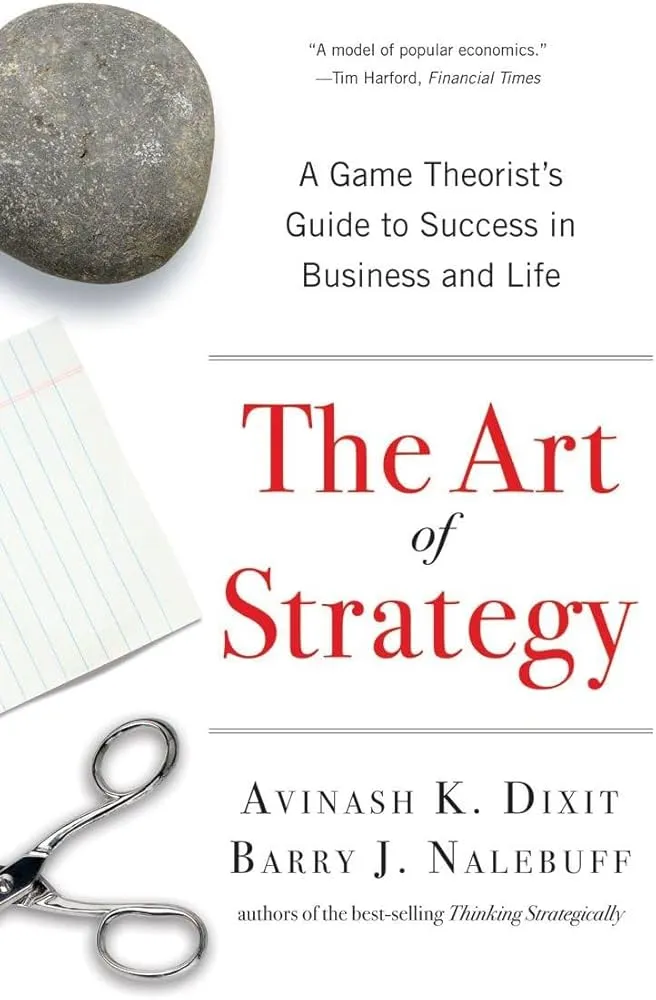
The Art of Strategy
Avinash K. Dixit & Barry J. Nalebuff