Security Reliability Design Review
Review a system design for security and reliability tradeoffs before implementation begins. Use when: evaluating an architecture proposal or design document and need to identify where security and reliability requirements conflict with feature or cost requirements; auditing a proposed design to determine whether security and reliability are designed in from the start or likely to require expensive retrofitting later; deciding whether to build payment processing or sensitive data handling in-house versus delegating to a third-party provider; assessing whether a microservices framework or platform incorporates security and reliability by construction rather than by convention; or producing a design review report for a security review, production readiness review, or architecture decision record. Applies the emergent property test (security and reliability cannot be bolted on — they must arise from the whole design), the initial-versus-sustained-velocity model (early neglect accelerates to later slowdown), and the Google design document evaluation checklist covering scalability, redundancy, dependency, data integrity, SLA, and security/privacy considerations. Produces: a design review report with identified tensions between feature, security, and reliability requirements; tradeoff recommendations; and prioritized security/reliability improvements. Distinct from threat modeling (which focuses on adversary scenarios) and code review (which audits existing implementation). Applicable at any stage where design decisions are still open.
 View on ClawhHub
Install
What You'll Need
Source Book
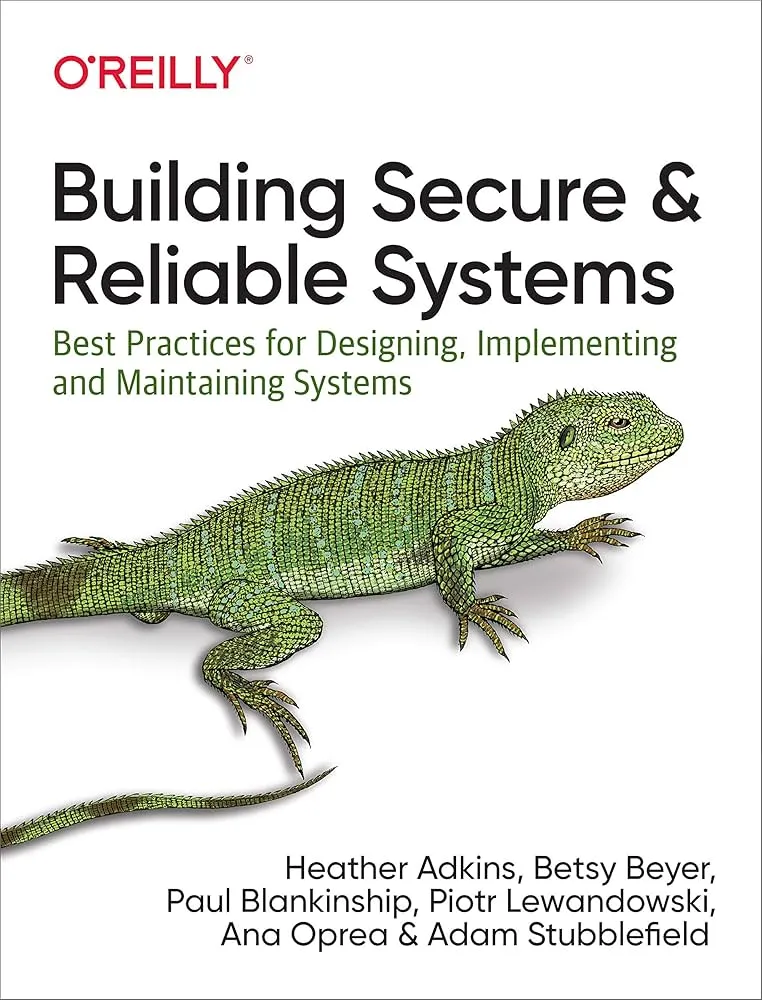
Building Secure and Reliable Systems
Heather Adkins, Betsy Beyer, Paul Blankinship, Piotr Lewandowski, Ana Oprea, Adam Stubblefield