Conditional Simplification Strategy
Select and apply the correct refactoring for complex or tangled conditional logic. Use when: a method has a complicated if-then-else that obscures why branching happens (not just what happens); a series of conditions all produce the same result; the same code fragment appears inside every branch; a boolean variable is being used as a control flag to track loop state; nested conditionals bury the normal execution path under special-case checks; a switch statement (or long if-else-if chain) branches on an object's type and new types are expected; a method's parameter controls which of several distinct operations runs; null checks are scattered throughout client code for the same object. Covers all 8 conditional refactorings from Fowler Chapter 9: Decompose Conditional, Consolidate Conditional Expression, Consolidate Duplicate Conditional Fragments, Remove Control Flag, Replace Nested Conditional with Guard Clauses, Replace Conditional with Polymorphism, Replace Parameter with Explicit Methods, Introduce Null Object. Also covers the supporting technique Introduce Assertion for making implicit state assumptions explicit. Includes the key semantic distinction between guard clauses (rare special cases that exit) and if-else (equal-weight alternatives), and Fowler's rejection of the single-exit-point rule as a reason to avoid early returns.
 View on ClawhHub
Install
What You'll Need
Source Book
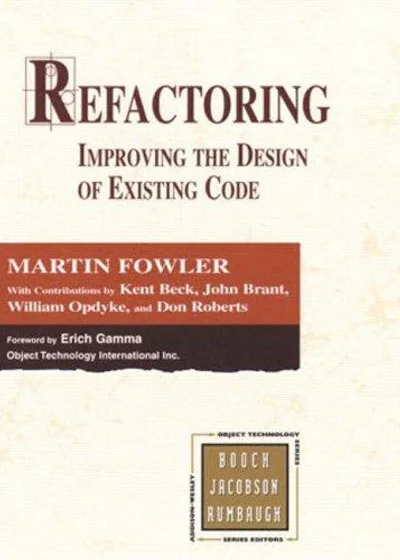
Refactoring: Improving the Design of Existing Code
Martin Fowler